
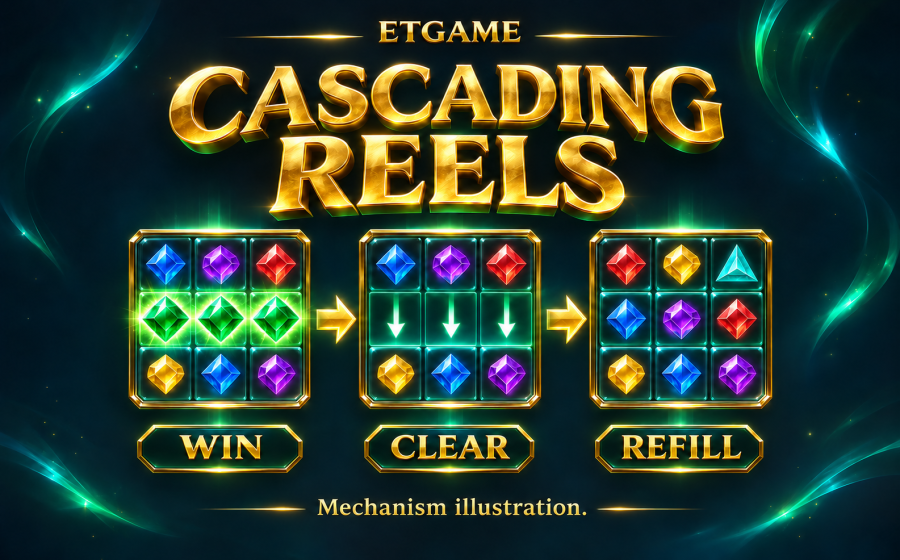
Cascading reels replace specified symbols after a win and evaluate the changed grid again. To read one spin correctly, follow the sequence: qualify the win, calculate that round, apply its multiplier, update the symbols, and check the next grid. Add the credited rounds once at the end.
How cascading reels create another evaluation
The first grid must satisfy the game’s own winning rule. A cascade does not turn a non-winning arrangement into a paid combination by itself. Ways games, line games and cluster games can use different qualification rules even when symbols fall in a similar animation.
PG SOFT’s Mahjong Ways 2 information describes wins on successive reels from the left, followed by winning-symbol removal, falling symbols and further evaluations until no winning combination remains. This provides a named example of the sequence, not a universal rule for every cascading game.
Cascading reels: removal, transformation and refill
Watch what happens to each relevant cell. Some symbols disappear, others drop, and a special symbol may change function. New symbols fill eligible spaces. The next evaluation uses that changed state rather than simply repeating the previous screen’s payout.
Mahjong Ways 2 gives a useful exception to a simple clear-and-refill sketch: its rules describe winning gold-plated symbols transforming into Wilds in the following round. A gold appearance alone is not already a Wild award. Confirm the transformation condition instead of treating every marked tile alike.
Apply the multiplier to the correct round
A multiplier attached to a round belongs to that round’s eligible win. Read whether the displayed amount is before or after multiplication. An increasing counter, a persistent symbol and a larger total are different facts; none supplies another game’s multiplier rule.
The table below is an editorial example, not a Mahjong Ways 2 paytable. Assume the figures in the second column have not yet been multiplied. Round one credits $0.20; round two credits $0.30. The third evaluation has no win, so this hypothetical chain stops.
| Step | Base | × | Win |
|---|---|---|---|
| 1 | $0.20 | 1× | $0.20 |
| 2 | $0.15 | 2× | $0.30 |
| 3 | $0.00 | — | $0.00 |
The total is $0.20 + $0.30 = $0.50. Applying the final 2× again to that credited total would count the multiplier twice. If the hypothetical paid spin cost $1, the payout-minus-cost difference is −$0.50. A sequence containing wins can therefore still return less than its starting cost.
Distinguish a cascade from another free spin
Another grid evaluation inside one cascade chain is not automatically another free spin. Check which counter changed. A free-spins award starts or extends a separate stage under its own entry and continuation rules.
In Mahjong Ways 2, the cited free-spins section states ten spins from three Scatters. The original Mahjong Ways announcement states twelve. The sequel’s free-spins multiplier bar also has its own values. Shared artwork or the word cascade does not make those counts interchangeable.
Use a short record to reconcile the final total
For each evaluation, note the winning condition, credited amount, active multiplier, changed symbols and running total. Then mark whether the next action is a cascade, a new paid spin or a free spin. Count an accumulated total transferring to the balance once.
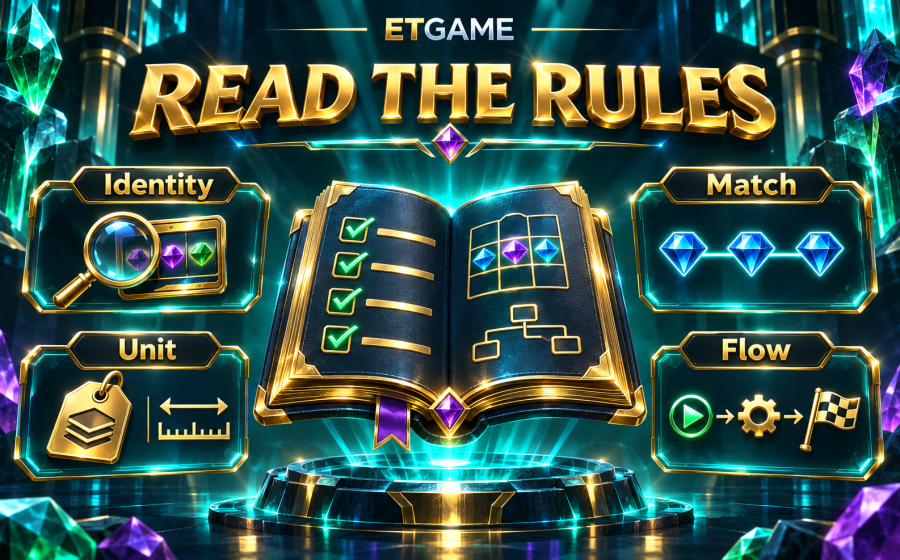
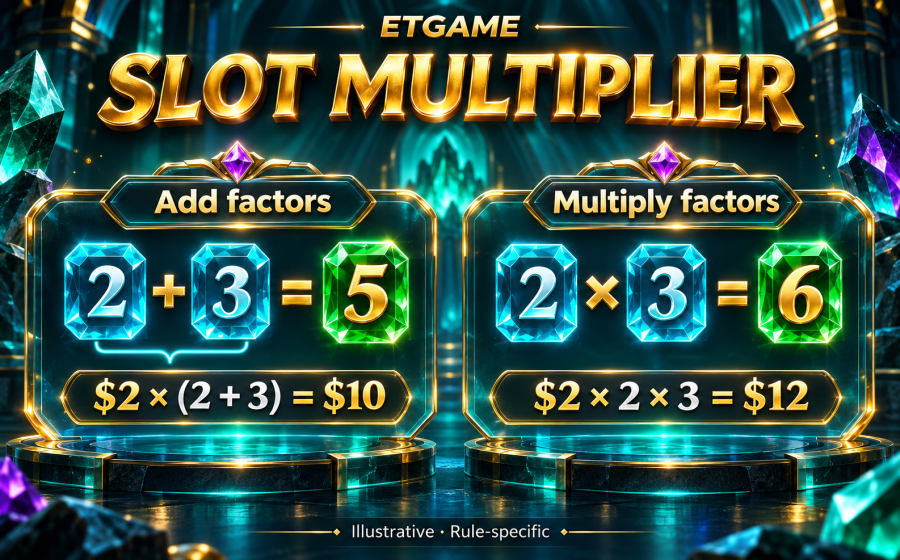
Use the slot rules checklist to find the relevant help sections, or the multiplier guide to check which amount receives a factor. Cascading reels describe an evaluation process; a long animation does not establish a particular return.
Sources and scope
Official materials checked November 10, 2026. The game-information PDF is cited through its indexed text; the direct download timed out. The document prints an update date of 08/07/2025. This is a rules-based editorial explanation, not a record of hands-on play or a verification of an operator build.
- PG SOFT — Mahjong Ways 2 game information
- PG SOFT — official Mahjong Ways 2 announcement
- PG SOFT — original Mahjong Ways announcement
- PG SOFT — company and supported regions
Discussion