
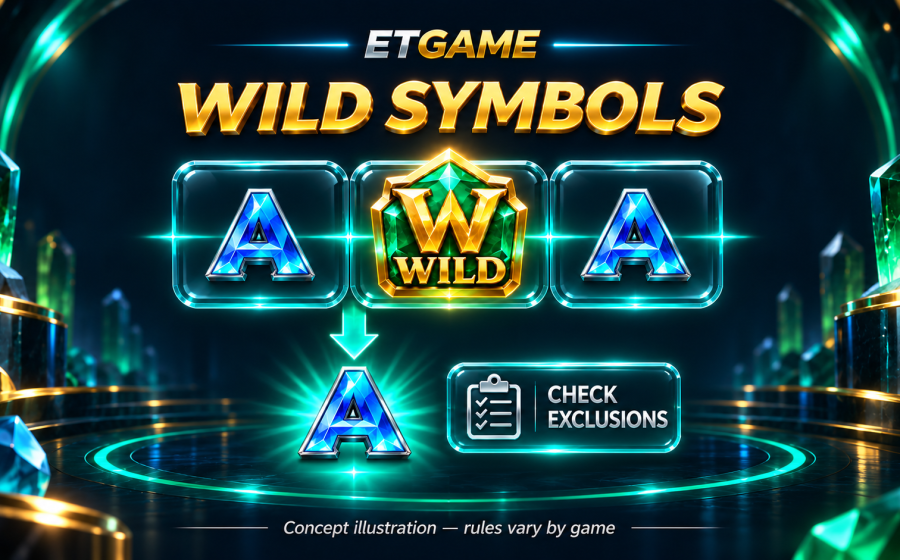
Wild symbols can stand in for eligible symbols when a slot evaluates a result. That does not make every screen containing a Wild a win. The substitution must still satisfy the game’s position, combination-length and payout rules, and some special symbols may be excluded.
The useful question is not simply “Did a Wild land?” It is “What may this Wild replace, where can that replacement count, and which award survives the payout rules?” Work through those questions before judging the result.
What can wild symbols replace?
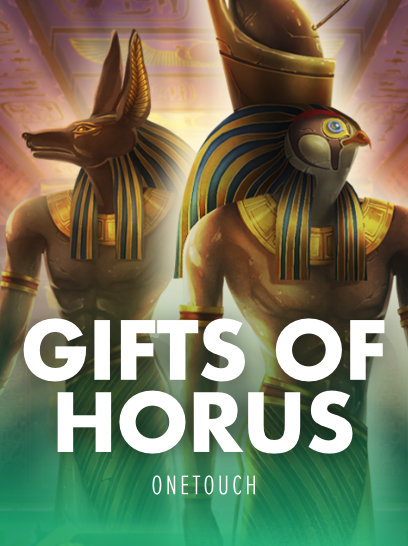
Read the substitution sentence beside the Wild in the help screen. In OneTouch’s Gifts of Horus, the official overview says the Wild appears on reels 2–5 and can replace other symbols except the Scatter, Scarab and Eye of Horus. Those exclusions keep three different feature roles separate: a substitute cannot simply become a missing bonus trigger or multiplier symbol.
This is a rule for the named game, not a universal exclusion list. A different title may give a Wild an additional trigger role. OneTouch’s Wild Sorcery, for example, describes three Wilds as its Free Spins trigger. “A Wild never triggers a feature” would therefore be too broad.
Check the winning path before the payout
Substitution changes which symbol a position can represent. It does not automatically change where a game looks for a combination. A fixed-line game can require symbols along a particular active line; a ways game uses its own reel and direction conditions; a cluster game uses its stated connection and minimum-size rules. See the comparison of paylines, ways and other evaluation methods before transferring a result between formats.
Hypothetical example: imagine a game that pays three matching symbols from the left on one specified line and allows WILD to replace A. On that line, A–WILD–A meets the declared three-A condition. One A above the line, another A below it and a Wild elsewhere do not establish that same line win. No real game’s prize or probability is being claimed here.
Also check the starting reel and minimum count. A Wild in a position that cannot complete the required path does not repair an unrelated gap. Count the evaluated combination, rather than every matching-looking symbol on the screen.
Wild symbols: own awards and substitutions
A paytable may list an award for a run of Wilds as well as awards they can form by substitution. Whether those results add together is another rule to read. The Blueprint help for the linked Fishin’ Frenzy Betfair/Sky profile states that only the highest paying win is paid on each line. That instruction should not be exported to every slot or every feature.
Hypothetical calculation: suppose a fictional paytable awards 4 credits for three A symbols and 8 credits for three Wilds. Suppose it also permits Wild-to-A substitution and pays only the highest result on a line. WILD–WILD–WILD then awards 8 credits, not 4 + 8 = 12. These invented amounts explain the selection rule; they are not the paytable for either game cited above.
After identifying the eligible award, read any multiplier’s scope separately. A symbol multiplier, line multiplier and round multiplier need not apply to the same amount. Our multiplier guide explains why “add” and “multiply” must not be interchanged.
A Mystery reveal is a different operation
A Mystery symbol first reveals or changes into another symbol under its own rules. In Gifts of Horus, the official overview excludes Wilds, Scatters, Scarabs and the Eye of Horus from Mystery outcomes. Treating an unresolved Mystery as a Wild would give it a substitution role that this description does not grant.
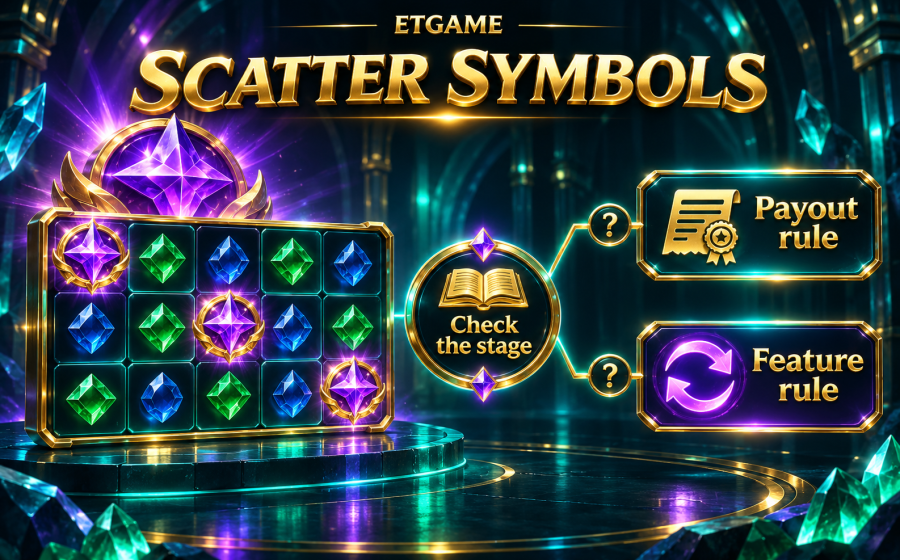
A Scatter’s payout or trigger conditions likewise need separate checking. The picture, name and location do not establish that it follows ordinary line-symbol rules.
Modifiers change coverage or persistence
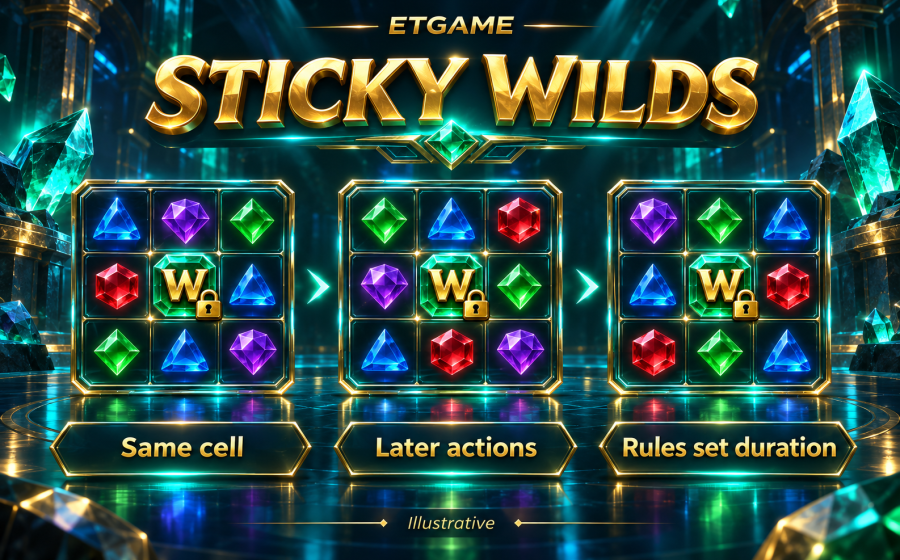
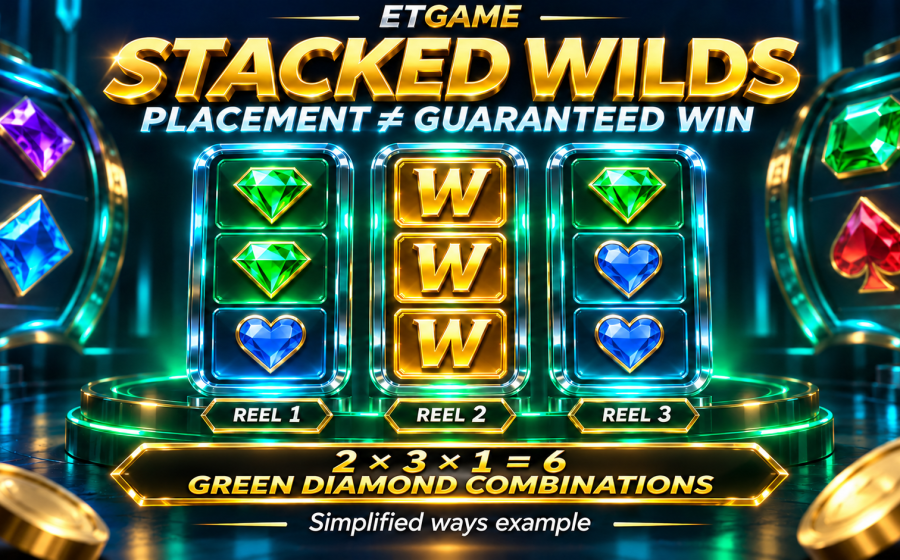
Sticky Wilds can remain under a stated duration rule; stacked Wilds describe grouped positions; expanding Wilds change coverage after a stated trigger. None of those labels alone supplies a new substitution list, payout priority or guaranteed result. Read the modifier and the ordinary Wild rule together.
A short checklist for wild symbols
- Identify the exact title, provider and version.
- Read which symbols may be replaced and every exception.
- Check the required positions, direction and minimum combination.
- Separate the Wild’s own award from substituted awards, then apply the payout-priority rule.
- Apply only the modifiers and multipliers that the same version specifies.
If the help text does not answer one of these questions, leave that part unresolved instead of filling the gap with another title’s rules. Use the rules-reading checklist to record the missing evidence. A correct interpretation explains an award; it does not predict the next spin or establish profit.
Sources and method
Official material checked November 13, 2026. This is a rules-reading explanation, without real-money or demo testing. Examples labeled hypothetical are not a measured paytable.
- OneTouch — Gifts of Horus
- OneTouch — Wild Sorcery
- Blueprint — Fishin’ Frenzy help, Betfair/Sky profile
Discussion